Data Innovation Challenges

Theme: Remote Connectivity

Challenge Day: Wednesday 7th October 2026

 
Overview
 
Many remote communities across Australia don’t have reliable internet or mobile coverage. This makes it harder for people to access essential digital services like education, healthcare, and government support, and contributes to the ongoing digital divide. Connectivity gaps are not always clearly understood or consistently represented, making it difficult for communities, governments, and industry to prioritise action and investment effectively.
Overview
Many remote communities across Australia don’t have reliable internet or mobile coverage. This makes it harder for people to access essential digital services like education, healthcare, and government support, and contributes to the ongoing digital divide. Connectivity gaps are not always clearly understood or consistently represented, making it difficult for communities, governments, and industry to prioritise action and investment effectively.
Tasks
To develop innovative, data-driven approaches that show and address connectivity gaps in remote environments and aim to (but not limited to):
Find the gaps: identify and analyse areas of limited or unreliable connectivity using available data;
Make it understandable: communicate connectivity gaps clearly to support communities, governments, and service providers in making informed decisions;
Consider multiple data sources: consider how data can be integrated from multiple sources to provide clearer insights into connectivity challenges and opportunities;
Impacts: show that you have considered the ethical, cultural, and community effects of how you use, explain, and present data;
Solutions: design solutions that remain usable in low-connectivity or offline contexts, such as through offline-first functionality.
Tasks
To develop innovative, data-driven approaches that show and address connectivity gaps in remote environments and aim to (but not limited to):
Find the gaps: identify and analyse areas of limited or unreliable connectivity using available data;
Make it understandable: communicate connectivity gaps clearly to support communities, governments, and service providers in making informed decisions;
Consider multiple data sources: consider how data can be integrated from multiple sources to provide clearer insights into connectivity challenges and opportunities;
Impacts: show that you have considered the ethical, cultural, and community effects of how you use, explain, and present data;
Solutions: design solutions that remain usable in low-connectivity or offline contexts, such as through offline-first functionality.
Resources
Participants may utilise the following resources, split into datasets and development tools:

Datasets

  • NT Remote Areas Mobile Coverage
  • ADII (Australian Digital Inclusion Index) Dashboard
  • National Broadband Network (NBN) dataset
  • ACCC Mobile Infrastructure Report – data release
  • Tropical cyclone reports
  • First Nations Connectivity Mapping Tool
  • ACMA Site Location Map
  • ABS TableBuilder
  • Other public datasets relevant to connectivity, geography, or community demographics

Tools

  • Python & related data analysis libraries
  • AI / Machine Learning libraries
  • Public data APIs
  • Other development, visualisation and mapping tools
Resources
Participants may utilise the following resources, split into datasets and development tools:

Datasets

  • NT Remote Areas Mobile Coverage
  • ADII (Australian Digital Inclusion Index) Dashboard
  • National Broadband Network (NBN) dataset
  • ACCC Mobile Infrastructure Report – data release
  • Tropical cyclone reports
  • First Nations Connectivity Mapping Tool
  • ACMA Site Location Map
  • ABS TableBuilder
  • Other public datasets relevant to connectivity, geography, or community demographics

Tools

  • Python & related data analysis libraries
  • AI / Machine Learning libraries
  • Public data APIs
  • Other development, visualisation and mapping tools

Eligibility

Teams of 2–4 enrolled CDU IT coursework students (undergraduate, postgraduate, TAFE & short courses). Higher Degree by Research students are not eligible.
Eligibility
Teams of 2–4 enrolled CDU IT coursework students (undergraduate, postgraduate, TAFE & short courses). Higher Degree by Research students are not eligible.
Competition process
Competition process
1. Team Up
Teams of 2–4 enrolled CDU IT coursework students (undergraduate, postgraduate, TAFE & short courses). Higher Degree by Research students are not eligible.
2. Submission

Deadline: 7 October 2026 Submit all materials via the Submission Link . Late submissions will not be accepted.

3. Presentation on Challenge Day
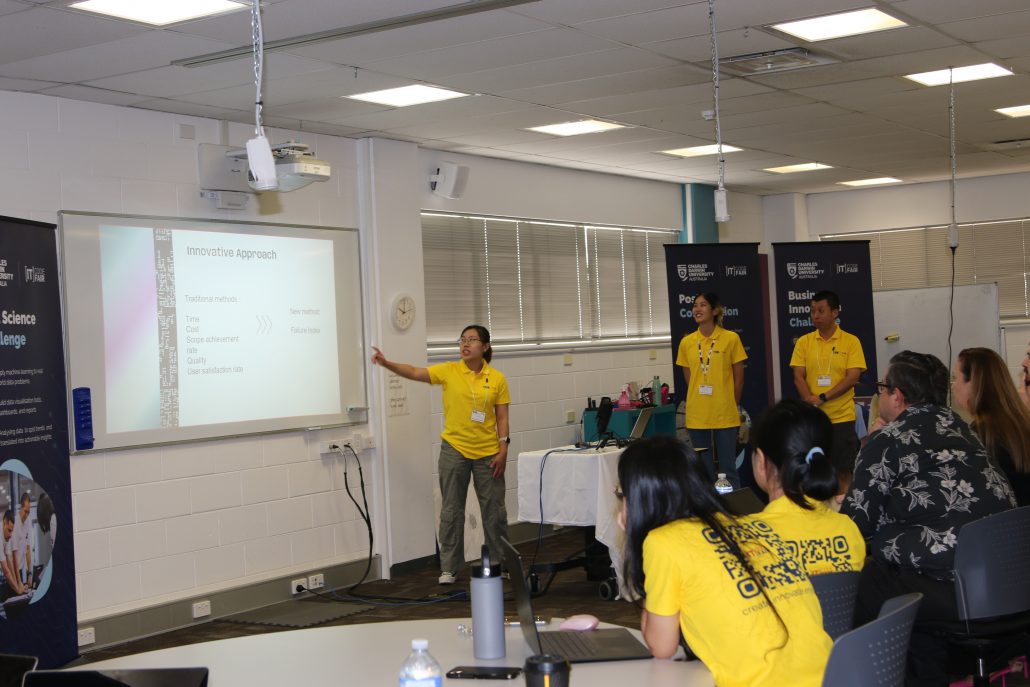
10-minute pitching + 5-minute Q&A per team, present your project face-to-face with industry judges.
4. Award
First winner and Runner up will be announced on 5 November.

Submission Link.

Submission Link.

Important Dates

Registration Closing Friday 12th September 2026
Final Submission Deadline Wednesday 7th October 2026
Challenge Presentation Day Wednesday 7th October 2026

Challenge Day Schedule

Wednesday 7th October 2026, 09:00 – 17:00 | Festival Learning Space 1.12, Danala | ECP, Darwin, Charles Darwin University

Evaluation

Judging Criteria

Submissions will be judged according to the following criteria: datasets, overall creativity and originality, technical sophistication, contextual relevance and practicality, ethical considerations and presentation.

First winner and runner up will be selected.

Panel of Judges

Bruno Braga
Executive Director – Digital Government Department of Corporate and Digital Development Northern Territory Government
Sarah Strzelecki
Department of Corporate and Digital Development Northern Territory Government
Mohammad Aurangzeb Khan
Department of Corporate and Digital Development Northern Territory Government
Sandeep Rasali
Department of Corporate and Digital Development Northern Territory Government

CDU IT CODE FAIR 2026

is brought to you by

PLATINUM SPONSOR

GOLD SPONSORS

SILVER SPONSORS

BRONZE SPONSORS